Compass Nurse Consulting LLC Blog
What Would We Do Differently If We Knew?
June is Dementia Awareness Month, and you'll see a lot of messaging encouraging people to seek testing and pursue a diagnosis.
That's often appropriate.
But I think there's a question we don't ask often enough:
What decision are we hoping this information will help us make?
For some families, I'd absolutely recommend additional testing.
If someone is younger, still living independently, or just beginning to show symptoms, understanding the likely type of dementia may help guide future planning.
Not because it tells us exactly what's going to happen.
It doesn't.
But different dementias tend to follow different patterns.
Alzheimer's disease is generally associated with ongoing decline over time, even though the timeline varies tremendously from person to person.
Vascular dementia can be less predictable. Some people remain relatively stable for periods of time. Others experience more noticeable changes after additional vascular events.
Lewy body dementia often brings challenges beyond memory, including fluctuations in cognition, movement changes, and hallucinations. For some families, that information may create a greater sense of urgency around future planning and support.
Notice the words I'm using: may, often, can.
There are very few guarantees in dementia care.
A diagnosis doesn't give us certainty.
Sometimes it gives families a better sense of what they're likely preparing for.
If a family is told their loved one likely has Alzheimer's disease, they may choose to begin learning about home care, assisted living, memory care, or caregiver support sooner rather than later.
Not because a crisis is guaranteed.
Because planning is easier when it happens before one.
At the same time, I work with families where the most important question isn't, "What type of dementia is this?"
It's, "What support does this person need today?"
If someone already requires significant assistance, if the family already understands that support needs are likely to increase over time, and if additional testing is unlikely to change planning or major decisions, I think it's reasonable to ask whether more testing is worth pursuing.
That doesn't mean a diagnosis has no value.
It means the value depends on how the information will be used.
Testing is not free.
I'm not talking about money.
I'm talking about time, appointments, travel, stress, lengthy evaluations, and the emotional toll that can come with repeatedly being asked to demonstrate what is no longer easy.
For some people, the information is worth every appointment.
For others, it may not change much.
I think this has to be decided case by case.
The conversations that matter most are often the same regardless of the diagnosis.
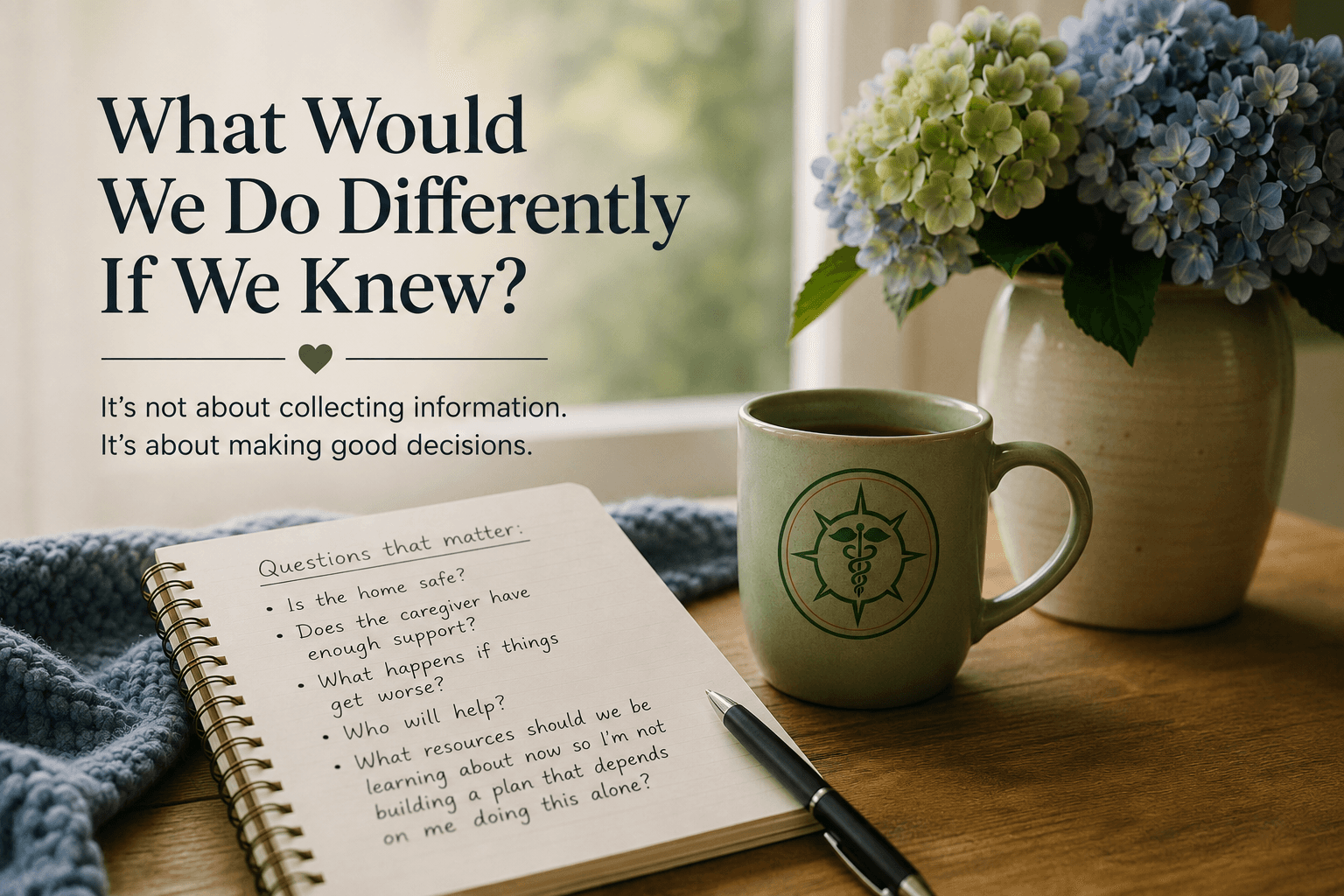
Is the home safe?
Does the caregiver have enough support?
What happens if things get worse?
Who will help?
What resources should we be learning about now so I'm not building a plan that depends on me doing this alone?
Many families are told that getting a diagnosis is important.
I agree.
I just think there's another question worth asking:
How will this information help us care for this person?
The goal isn't to collect information.
The goal is to make good decisions.
For some families, a diagnosis changes everything.
For others, it changes very little.
That's why I keep coming back to the same question:
What decision are we hoping this information will help us make?
-Jessica Kowal RN, BSN 🌿
Note to readers:
This content is intended for educational and reflective purposes only and does not constitute medical, legal, or individualized care advice. Care decisions in dementia are complex and should be made in consultation with qualified healthcare and support professionals who understand the specific circumstances involved.
Notice
RN consulting and care management services.
Not an emergency service.
If urgent, call 911.